Basket, Rack or Bag: Choosing Where the Load Goes
Choose a bicycle basket, rear rack or carried bag by access, load stability and setup, so everyday errands feel manageable from the first turn.
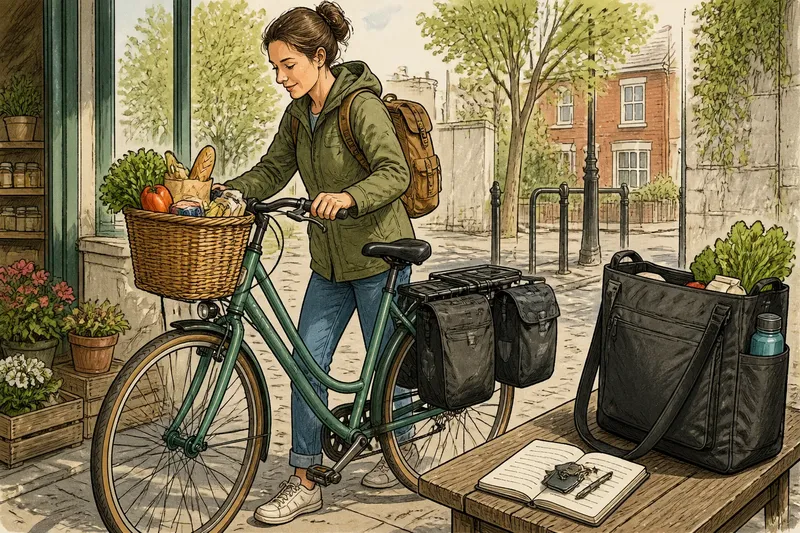
You reach the shop, lift a paper bag over the handlebars and feel the steering shift as you turn towards home. Choosing where the load goes on a bicycle can prevent that uneasy ride: a front basket, rear rack and carried bag each suit different errands, and each can cause trouble when its limits are overlooked.
Steering feels heavy with a front basket
A front basket keeps shopping visible and within easy reach, but anything placed ahead of the steering can influence how the bicycle responds. A heavy or lopsided load may make the handlebars feel reluctant to turn, especially at low speed or while walking the bicycle through a doorway.
The usual cause is not simply that the basket is in front. The load may be too dense for the basket or its fittings, sitting high, or piled to one side. A loose handlebar-mounted basket can also move as the steering turns, so check how it attaches before relying on it for a regular shop.
Try this, in order:
- Check the basket and its mounting for movement, damage or loose fasteners; follow the maker’s fitting and load guidance.
- Move dense items lower and towards the centre, keeping the contents from shifting.
- Take out anything that makes steering awkward, then try the lighter load at walking pace in a clear place.
For a quick trip with light, easy-to-reach items, a basket can be convenient. For heavier groceries, a rear rack or a bag designed to attach securely may feel less intrusive at the handlebars. A front basket is not a substitute for a suitable, sound mounting system.
Rear-rack cargo sways or knocks
A rear rack usually leaves the handlebars clear and can carry a pannier or other purpose-made luggage. Trouble often starts when the bag is not fixed firmly, the contents slide inside it, or the load sits unevenly from side to side. A loose strap can flap towards the wheel, while a bulky bag may brush a heel as you pedal.
Before setting off, look at the rack attachment points and the way the luggage connects. Keep items from shifting within the bag, secure loose straps, and check that the bag does not touch the wheel, spokes or your feet as the pedals turn. If you cannot make the fit secure, remove the load rather than improvising a tie around moving parts.
Say you are carrying a laptop and a small grocery shop on a bicycle with a fitted rear rack. Put the laptop in a padded sleeve inside one pannier, place the groceries so they cannot roll around, and use the other side for a similarly modest load if needed. The expected result is cargo that stays organised and does not tug from one side; if the rack or bicycle feels unstable, reduce what you carry and reconsider the arrangement.
Some riders find a rack more useful than a basket for regular errands because it can support luggage that closes or detaches. It does, however, ask for compatible rack fittings and a bag that stays clear of the wheel and heels. Check the bicycle and luggage instructions before fitting or loading; where the right choice depends on the maker’s limits or local rules, follow those requirements.
A carried bag pulls at your shoulder
A backpack or shoulder bag avoids fitting anything to the bicycle, which can suit an occasional journey or a rider who uses several bikes. The trade-off is that the rider carries the weight directly. A strap can slip, a bag can swing during turns, and a warm or bulky pack may make a short errand less comfortable.
First, check that the bag closes and its contents will not shift. Adjust the straps so the bag sits securely, then walk and move your arms before riding. If it swings or restricts your movement, lighten it, change the fit, or move the cargo to a bicycle-mounted option. Do not hang an ordinary shoulder bag from the handlebars: it can interfere with steering or fall into the wheel.
Carried bags are most straightforward for a few light items, especially when you need to take the bag with you at your destination. A rack bag or basket may be a better match when the contents are awkward, heavy or needed throughout the journey. The right comparison is not just the bag’s capacity; consider how the load feels on your body and whether it stays put as you ride.
Access at the destination takes longer than expected
Some carrying problems appear after you stop. A closed pannier can take longer to open than an open basket, while a basket may leave purchases exposed to rain or easy to spill when the bicycle is parked. A backpack is easy to take indoors, but you may have to unpack it to find a small item.
Decide what you will need to reach during the errand. Keep a travel card, keys or a shopping list in a pocket you can open without disturbing the main load. Use a closable bag when weather or keeping items together matters; choose an open basket when quick access is more useful and the contents are stable. A removable bag can offer a middle ground if its attachment is simple enough for the way you use the bike.
For a shop visit, separate fragile or crushable purchases from dense items rather than stacking everything in one heap. A basket liner or zipped pannier can help contain small goods, but only if it fits securely and does not obstruct the bicycle’s moving parts. At the destination, take valuables with you instead of leaving them in an unattended basket or on a rack.
Which carrying method suits this errand?
Is a front basket suitable for groceries?
It can suit a light shop when the basket is secure, the contents sit evenly and the steering remains comfortable. Dense or unstable groceries may be easier to carry in a suitable rear bag.
Does a rear rack need a special bag?
Use luggage made to attach securely to that rack, or follow the rack maker’s instructions for compatible cargo. An ordinary bag should not be left loose where straps or fabric might reach the wheel, spokes or pedals.
Is a backpack better than a bicycle basket?
A backpack avoids bicycle fittings and is convenient to take inside, but its weight stays on your body. A basket can be easier for light, accessible items, provided its mounting and load do not make steering awkward.
What should I try if the bicycle feels unstable?
Stop somewhere safe and remove or rearrange the load before continuing. Check that the cargo is secure and evenly placed; if the bicycle still feels difficult to control, leave the load behind and seek advice from a qualified cycle mechanic where a fitting fault may be involved.
Choose for the load you actually carry
For everyday carrying on a bicycle, start with the errand rather than the largest bag you can fit. An open front basket favours quick access to light items; a rear rack favours securely attached luggage while keeping the handlebars clear; a carried bag avoids bicycle setup but puts the load on you.
Before leaving, ask whether the load is stable, whether you can reach what you need, and whether the attachment suits your bicycle. If any answer is uncertain, carry less or choose another method. A load that stays out of the steering, wheels and your movement is more useful than extra capacity you cannot manage comfortably.