The Chain-Oiling Myth: More Is Not Always Better
Chain oiling works best as a clean, modest routine: learn when to lubricate, how to wipe away excess and what a noisy chain may be telling you.
You finish a damp commute, glance at the chain and see a dry-looking patch near the rear gears. Before reaching for the bottle, remember that chain oiling is not a contest to make every link shine. A clean, modest routine is a better starting point than adding lubricant whenever the chain looks dull.
A dull surface is not a diagnosis
The outside of a bicycle chain can look dry while lubricant remains inside the rollers, where the moving parts need it. Conversely, a glossy chain may have oil on its plates and grit sticking to it without being properly cared for. Appearance alone is a rough clue, not a reliable instruction.
Listen and feel during an ordinary ride. A chain that starts to sound dry or rough, or shifts with a new rasp, may need attention; first check that the sound is actually coming from the drivetrain. A rubbing brake or a poorly aligned gear can make a similar noise, and more oil will not fix either.
Extra oil gives road grit somewhere to cling
Lubricant helps the chain’s moving joints, but oil left on the outside catches dust, sand and road film. That dirty paste can work its way around the drivetrain and make the chain, cassette and chainrings grimy. Adding another coat over a contaminated one often hides the problem rather than solving it.
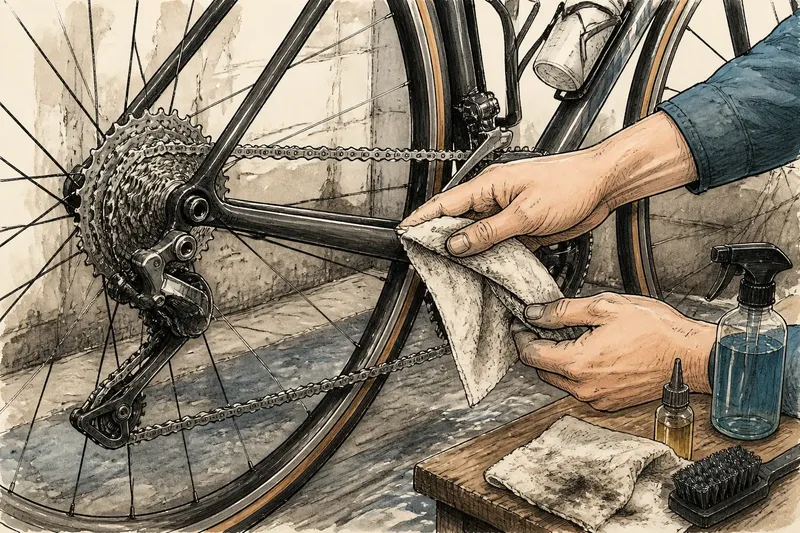
Think of chain care as two linked jobs: remove loose grime, then apply lubricant sparingly to the chain. A clean rag and a bicycle-specific chain cleaner or suitable drivetrain degreaser can help with cleaning. Avoid spraying cleaner indiscriminately around the bike; follow the product label and keep cleaning products away from brake surfaces.
Choose lubricant for the riding conditions
Wet or all-weather chain lubricants tend to stay put through rain, but can collect more dirt if left thick on the surface. Dry-condition lubricants are generally less tacky and suit cleaner, drier riding, but may need attention sooner after wet weather. Wax-based products are another option, though they call for their own preparation and application routine.
There is no single bottle that suits every rider and route. Check the lubricant’s intended conditions and directions, then choose one you can apply carefully and maintain. Do not mix products casually: a wax treatment, for example, may require a very clean chain before application.
Apply a small amount where the chain moves
For routine care, shift to a middle gear if convenient and turn the pedals by hand so the chain moves slowly. Place a small drop on each roller as it passes the lower part of the chain, rather than flooding the whole drivetrain. Keep fingers clear of the chain’s path and stop turning before wiping.
Let the lubricant settle for the time stated on its label, then hold a clean, lint-free rag around the chain and rotate the pedals by hand to remove the excess. The plates may still look lightly treated; they do not need to carry a wet coating. A final wipe of the cassette and chainring teeth can lift grime without pushing the rag into moving parts.
Say you ride a short route to work on mostly dry roads, then notice a faint chain rasp after a rainy return. Instead of topping up with a heavy pour, you wipe off the road film, apply the dry-condition lubricant you normally use to the rollers, allow it to settle and remove the surplus. The useful result to look for is quieter, smoother chain movement without a wet, dirt-catching surface.
Small signs help you decide when to act
- After rain or a wet-road ride: dry the chain and inspect it for grime or signs of corrosion; clean and lubricate if it sounds rough or looks contaminated.
- After a dusty ride: wipe the chain before deciding whether it needs fresh lubricant, since dust on the surface can make a healthy chain look coated.
- Before a regular ride: listen for a new dry rasp and check that the chain moves freely through the gears.
- After cleaning: apply lubricant to the rollers and wipe away the outside residue rather than leaving a shiny layer.
- If noise remains: check for a different source or ask a bicycle mechanic to inspect the drivetrain instead of adding repeated coats.
What should you do when the chain still looks or sounds wrong?
How often should I oil a bicycle chain?
There is no useful calendar rule for every route and lubricant. Check the chain after wet, dusty or gritty rides, and use sound, movement and visible contamination to decide whether cleaning or lubrication is due.
Should a chain look wet after oiling?
A thin residue may remain, but the chain should not be dripping or visibly coated in tacky oil. Wipe away surplus so it is less likely to collect dirt.
Can I add oil without cleaning the chain?
If the chain is lightly dusty, a careful wipe may be enough before applying a small amount. If it carries gritty or greasy buildup, clean it first; fresh lubricant over dirt can leave the drivetrain messier.
Why is my chain noisy after oiling?
Too much lubricant, trapped grime, a dry internal joint or a noise from another component can all be possibilities. Wipe the chain, inspect its movement and seek a mechanic’s help if the noise persists or shifting becomes unreliable.
Let the rag make the final call
After chain oiling, run a clean section of rag lightly over the outside once more. If it picks up a thick, dark smear, keep wiping until the chain no longer carries obvious excess; if the chain is clean and moves quietly, stop rather than adding another drop. That restraint is the practical heart of chain oiling: tend to the moving joints, remove what does not belong on the surface, and let the next ride provide a fresh reason to inspect.