The Bicycle’s Place at Home: Hooks, Stands and Floor Space
Bicycle storage at home should keep walkways clear and the bike easy to reach. Compare hooks, stands and floor parking before settling on a spot.
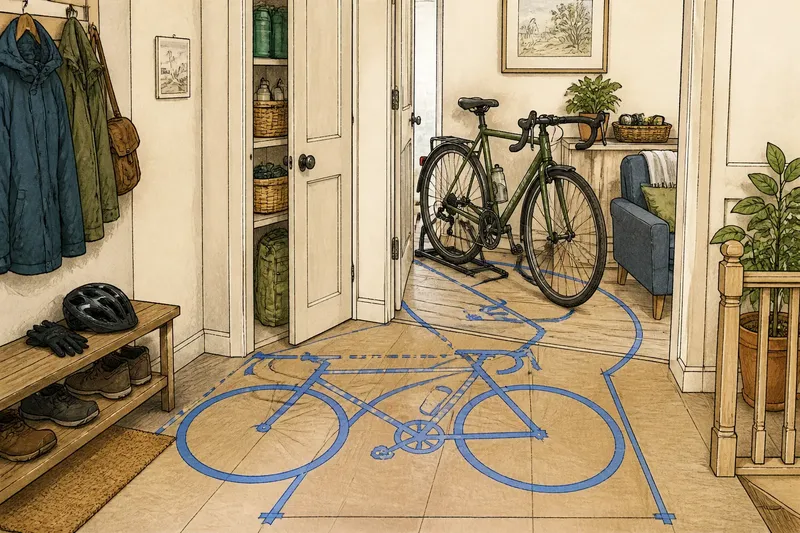
You come through the front door with a damp coat, and the bicycle is exactly where someone needs to pass. Good bicycle storage at home starts with that everyday pinch point: the route in and out, not the empty patch of wall that looks promising.
Choose a place and a support method together. A hook may clear the floor but require lifting and a suitable wall; a stand is easier to shift but takes up floor space; floor parking avoids hardware but needs a defined, unobstructed patch.
Map the bicycle’s route before choosing its parking place
Check the whole trip from the entrance to the proposed spot. Open doors fully, note cupboards and drawers you use, and consider whether someone carrying shopping needs to pass. A bicycle that fits at rest can still be awkward to bring through a turn.
Use masking tape to mark the bicycle’s approximate outline on the floor. Include the handlebar and pedal positions, then move the marks to reflect how you would turn the bike through the doorway. Walk the route and open nearby doors; if the tape crosses a regular path or blocks access, try another location.
Also leave room to take the bicycle back out. A tight fit that demands moving a chair or shifting another bicycle each time can turn a tidy-looking corner into a daily obstruction.
Match a hook, stand or floor parking to the household
A wall hook or rail can free floor area, but the support must suit both the bicycle and the wall. Some designs hold a wheel; others support the bicycle differently. Check the product instructions, whether lifting is comfortable, and whether the wall and fixings are appropriate. If you are unsure about the wall or installation, ask a competent installer.
A freestanding stand avoids drilling and can be moved when the layout changes. Check that it is designed for the bicycle’s type and that the bike sits stably in it. The trade-off is floor space: allow room for the stand as well as for rolling the bicycle in and out.
Floor parking is a straightforward option where a clear patch is available. A mat or tray can mark the space and catch ordinary dirt, but avoid a raised edge that could trip someone. Keep pedals and handlebars clear of bags, clothing and other items that may snag as the bicycle moves.
Keep accessories close without crowding the bicycle
A lock, lights and gloves are useful near the exit, but storing them in the bicycle’s turning path can make parking harder. Put them on a shelf or in a small basket beyond the handlebar and pedal area. Keep straps and loose fabric away from moving parts.
If several bicycles share a room, consider which one needs the easiest access. Leave enough room to remove each bicycle without shifting the others. A compact row is not helpful if reaching the bike used most often means moving another one first.
Check these details before settling on bicycle storage
- Observation: the marked bicycle outline crosses a walkway. If it does, choose another parking spot; otherwise, check whether people can pass comfortably.
- Observation: a door, cupboard or drawer meets the bicycle or its handlebars. If it does, change the position or orientation; otherwise, confirm that it remains accessible when the bicycle is parked.
- Observation: a hook requires a lift that feels awkward during a practice movement. If it does, choose a lower support, a stand or floor parking; otherwise, check the wall and fixing instructions before installation.
- Observation: the proposed wall surface or fixing method is unclear. If it is, pause and ask a competent installer; otherwise, follow the fixture maker’s instructions and check for pipes or cables before drilling.
- Observation: a stand rocks or does not suit the bicycle as it is placed in position. If it does, stop using it and choose a compatible stable support; otherwise, check that the bike can be rolled out without striking nearby objects.
- Observation: a mat or tray creates a raised edge across the walking route. If it does, remove it or use a flat alternative; otherwise, check that it stays in place and does not obstruct the bicycle.
- Observation: the home is rented or the proposed location is in a shared area. If it is, check the tenancy terms or building rules and ask the relevant person before making changes; otherwise, make sure the route and exits remain clear.
Which storage option suits your home?
How much room does a bicycle need indoors?
Allow for the wheels, handlebars and pedals, plus enough space to roll the bicycle in and out. Tape the outline on the floor and check it against door swings, cupboards and walking routes.
Are bicycle hooks better than stands?
Hooks can save floor space but need a suitable wall and may require lifting. Stands use floor area and can be easier to reposition, so choose according to the bicycle, the room and the way you handle the bike.
Can a bicycle be stored in a hallway?
It can work if doors, cupboards and routes remain usable and the bicycle does not obstruct an exit or shared access. Check any building rules before storing it in a communal hallway.
Where should bicycle accessories go?
Keep frequently used items near the exit but outside the handlebars’ and pedals’ path. A shelf or basket can keep small gear together without spreading it across the floor.
A worked layout makes the trade-offs visible
Imagine Mara lives in a rented flat with a narrow entrance hall, a sitting-room corner and a bicycle she uses regularly. She wants to avoid lifting the bicycle and needs the hall cupboard to remain reachable. She marks the bicycle’s outline with masking tape in the hall and finds that the bars cross the walking route, so she rules that spot out.
Next, she marks the sitting-room corner and practises rolling the bicycle through the doorway. The route works, but a chair catches the handlebars. She shifts the chair, repeats the movement and finds she can enter and leave without brushing it. A high wall hook would mean lifting the bicycle, so she sets that option aside; a freestanding stand could work, but she checks its instructions and compatibility before choosing one.
Her resulting trade-off is clear: the sitting-room corner uses a little floor space, while keeping the hall and cupboard accessible and avoiding a lift. She plans to keep the lock and lights on a nearby shelf, outside the bicycle’s path. If the stand proves unstable or the route becomes blocked, she will move the parking place rather than force the layout to work.
Let everyday use decide whether the place works
After arranging bicycle storage at home, check the ordinary movements that matter: bringing the bike in, taking it out, opening nearby doors and passing through the room. If one regularly requires moving furniture or stepping around a wheel, change the position or support instead of accepting the nuisance.
Keep the parking area from becoming a general landing spot for bags and wet clothing. A clear route and a support that suits the bicycle matter more than making the bike occupy the smallest patch on paper.